A fashion trend is not just about a color or a cut spotted on a runway. It reflects a broader shift in how we choose, buy, and wear clothing. For several seasons now, fashion trends have revolved around three axes: the appreciation of existing pieces, transparency about the origin of garments, and a return to silhouettes that emphasize longevity rather than surprise.
Textile Traceability: What Regulation Changes for Style
Before discussing cuts or palettes, a structural change deserves attention. France has intensified regulatory pressure on ultra-fast fashion, making brands with extremely rapid turnover potentially less visible in the market. This evolution, documented by the Jones Day firm in September 2026, pushes consumers towards more sustainable and distinctive purchases.
The European Union is simultaneously working on a digital passport for textile products. This system will require brands to declare the composition, origin, and environmental footprint of each piece. For buyers, this means direct access to previously opaque information, allowing for real comparisons between two garments beyond their appearance.
In practical terms, this regulatory pressure favors brands that can document their production chain. Brands offering moderately renewed collections, with identifiable materials, gain credibility. Exploring the Véron fashion site shows how some selections are already integrating this transparency criterion into their clothing approach.
Second-Hand and Vintage Pieces: A Style Lever in Their Own Right

Second-hand has moved beyond being just an economic reflex. Buyers are now looking for pieces with a story, visible patina, or potential resale value. This evolution, noted by several analyses of the second-hand luxury market, favors recognizable vintage clothing over standardized items.
The live shopping phenomenon accelerates this trend. According to FashionNetwork, consumers want to see live the drape, material, and actual color of a pre-worn piece. This information, often absent from traditional product sheets, becomes a decision-making criterion. In the UK, live vintage sales are growing among several generations.
What changes for style: an elegant wardrobe is also built through subtraction. Instead of adding new pieces each season, the approach involves spotting a structured blazer from the 1990s, a patinated leather bag, or a dress with a cut that transcends decades. The result produces a silhouette less predictable than a total look from the same collection.
Criteria for Spotting a Good Vintage Piece
- The quality of finishes (stitching, lining, buttons) immediately indicates the remaining longevity of the garment
- Natural materials (wool, silk, thick cotton) age better than synthetics and retain their drape after several years
- A cut that does not rely on an ultra-dated detail (excessive shoulder pads, extremely low waist) transcends seasons without looking out of place
Trendy Colors and Silhouettes: Focusing on Coherence Rather than Accumulation
The spring-summer and autumn-winter 2026 runways outline a palette where red, leather, and neutral tones coexist. The temptation would be to adopt every micro-trend spotted on the runways. The reality of a sustainable style works differently.
Building a personal palette of three to four colors allows for assembling coherent outfits without multiplying purchases. A base of neutrals (beige, navy, black, off-white) paired with a signature color is enough to create varied looks throughout an entire season.
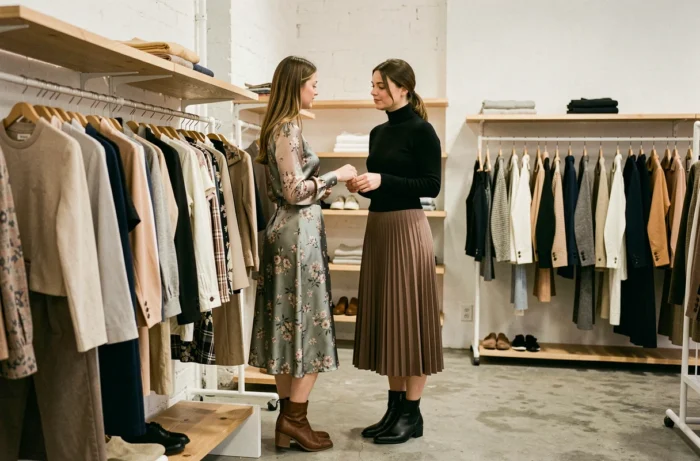
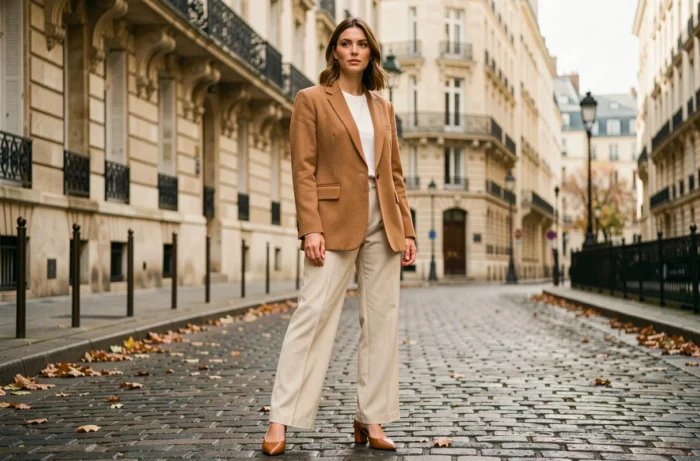
In terms of silhouettes, two directions stand out. The first favors structured tailoring: straight pants, fitted blazers, shirts with detailed collars. The second explores controlled volume with oversized sweaters, midi skirts, and flowing dresses. These two styles do not oppose each other; they can be combined in the same wardrobe depending on the context.
Assembling an Elegant Outfit Without Following Every Micro-Trend
The trap of seasonal trends is overload. One strong piece per outfit is enough to create an effect. The rest of the silhouette remains understated, in materials and cuts that the eye identifies effortlessly.
- A colorful jacket worn with raw jeans and flat shoes creates a clear contrast without excess
- A statement accessory (structured bag, visible belt, architectural earrings) effectively replaces three trendy layered pieces
- Textured materials (ribbed knit, wrinkled linen, soft leather) add visual depth without resorting to seasonal prints
Destruction of Unsold Goods and Responsible Fashion: The Impact on Available Collections
The AGEC law is gradually regulating the destruction of unsold non-food items in France. For textiles, this means brands must find alternatives: donation, recycling, controlled destocking. Collections tend to become more streamlined, with fewer references produced in adjusted quantities.
For buyers, the consequence is direct. The pieces available in stores or online become more targeted. Massive end-of-line sales at cut prices are becoming rarer, making each purchase more engaging. A garment chosen from a streamlined collection is more likely to retain its stylistic relevance over several seasons.
This tightening also pushes brands to invest in better-designed basics. A t-shirt with a sufficiently dense weight, a properly lined dress, pants whose cut holds up after several washes: these technical details, long neglected in favor of production volume, are becoming selling points again.
The fashion trends of 2026 are not only read on the runways. They play out in the traceability of materials, in the choice of a vintage piece over yet another new basic, and in the ability to build a coherent wardrobe with fewer, better-selected pieces. The resulting elegant style relies more on the precision of choices than on their quantity.