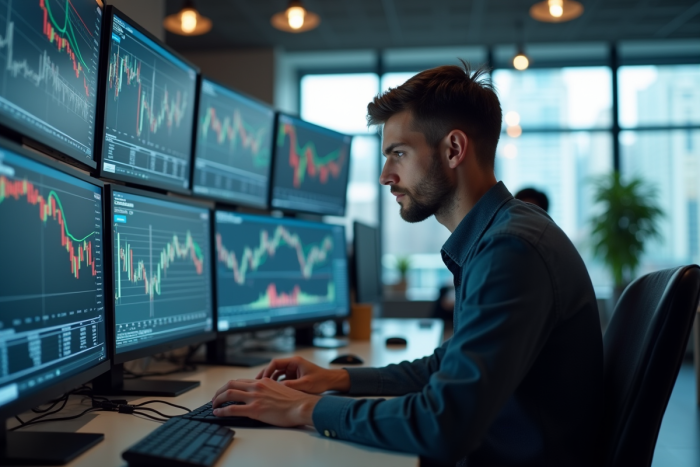
The statistical arbitrage algorithm has long been reserved for sophisticated funds, while it can be applied to much more modest portfolios. Some volatility signals, often overlooked, correct overconfidence biases better than complex predictive models. The gap between efficient market theory and daily reality forces a multiplication of approaches.
The adoption of specific tools, sometimes absent from traditional platforms, transforms risk analysis and management. Traders who integrate these less visible solutions increase their autonomy and refine their decision-making, well beyond conventional methods.
Why Quantitative Tools Remain Underestimated in Modern Trading
Modern markets are overflowing with data and execution speed has never been higher. Yet, many traders miss out on quantitative tools capable of evolving their decision-making. There remains suspicion towards anything that seems reserved for a handful of specialists armed with degrees or out-of-reach infrastructures. But the real boundary does not separate experts from others: it distinguishes those who bet on the precision of quantitative analyses from those who settle for classic indicators, often worn to the bone.
Two main barriers explain this distrust: the impression of complexity of automated trading systems and the lack of suitable training. However, some tools, like the market facilitation index, offer a fresh perspective on market depth or buy-sell pressure, without requiring years of coding or mathematics. This indicator, still too rarely used, highlights the imbalance of buy orders and the dynamics of market prices, thus revealing the fine fabric of flow movements.
The interest in these tools is not limited to their technicality. Markets react to signals that are sometimes subtle, to imbalances that last only a breath. Taking these subtleties into account in risk management and trading strategy optimization can change the game. Many cling to their classic methods, underestimating the scope of order flow analysis or the effectiveness of real-time correlation matrices. Now, monitoring capital loss risk is no longer simply about setting thresholds: it involves integrating fine information capable of revealing a previously invisible trend.
The range of existing tools is vast. Here are some examples that, each in their own way, shape strategy and refine positioning:
- Filtering statistical anomalies to spot atypical signals before others
- Multi-parameter backtesting allowing for testing different configurations and scenarios
- Dynamic visualization of order books to grasp the ever-changing reality of the market
This kind of tooling, long reserved for large institutions, is becoming accessible to those willing to move beyond automatism and renew their approach. Algorithmic finance is no longer a closed club.
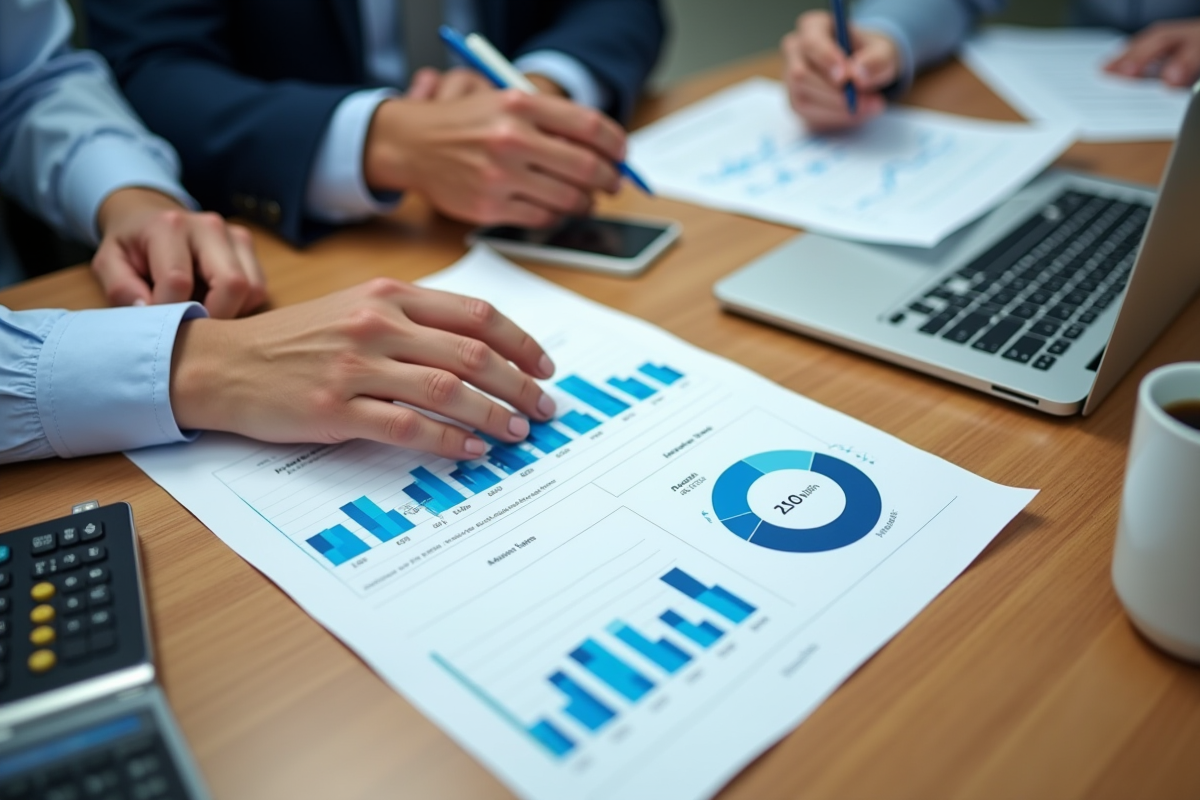
Discover Unexpected Resources to Refine Your Strategies and Enhance Your Skills
The range of financial market training tools is constantly expanding and becoming essential for anyone looking to move beyond mere observation of the trading market. Many still underestimate the power of targeted digital resources, while they open up new perspectives for perfecting trading strategies. Educational platforms, structured around interactive modules, offer case studies, backtesting simulations, and workshops dedicated to risk management.
Building a solid trading plan requires integrating concrete tools, such as a trading journal or careful monitoring of the economic calendar. These supports not only promote reflection but also the ability to analyze one’s own mistakes and formalize new scenarios. Technical analysis now goes far beyond simple chart reading: exponential moving averages, support resistance levels, and the interpretation of buy-sell orders through the order book are all building blocks for developing sharper strategies.
Some concrete avenues deserve exploration to strengthen practice:
- Specifically training on derivatives to master leveraged trading
- Establishing continuous monitoring by scrutinizing expert opinions and weak market signals
- Relying on advanced fundamental analysis tools to anticipate the impact of macroeconomic announcements
Regularly confronting one’s methods with those of market makers sharpens the reading of hidden dynamics. It is not the sum of knowledge that makes a seasoned trader, but the ability to integrate new gestures, to test, to put strategies to the test of real-world volatility. This is where the difference lies, far from the comfort of habits.
The future of trading belongs to those who dare to shake up their benchmarks. Those who, every day, add another string to their bow. In this game, unknown tools are not just gadgets: they become true allies in transforming intuition into decision, and decision into sustainable performance.