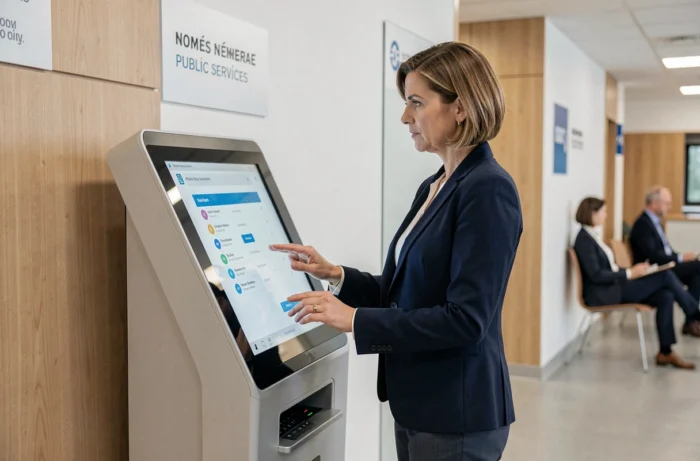
Neo Yvelines, the digital workspace (ENT) deployed in the colleges and high schools of the department, is approaching the start of the 2026 school year with a series of updates that affect both the mobile application and the regulatory framework. What concrete changes distinguish this version from previous ones, and what measurable impacts can be observed on the daily usage of students, families, and teachers?
Mobile and web features of Neo Yvelines: what has really changed
The mobile update 1.17.6, documented by Édifice in September 2026, transfers several functions that previously existed only on the web version to smartphones. The login screen has been redesigned to allow for quicker identification of the associated educational network.
Beyond this addition, three improvements target specific irritants:
- PDF display in communities now works without external downloads, directly within the app.
- The communication notebook better manages families with multiple enrolled children, avoiding duplicate notifications.
- Tables embedded in assignments display correctly on small screens, which was not the case before.
These corrections do not represent a spectacular overhaul. They reflect a refocusing on mobile accessibility in daily use rather than the addition of extra modules. For Yvelines families, the gain is measured in time: fewer steps to consult an assignment, less confusion between children’s profiles.
A broader overview of the services offered by Acti Carrière details the developments related to simplified access and user pathways of the platform.

Order of September 7, 2026: the new regulatory framework for ENTs
An order published in the Official Journal on September 23, 2026 now sets common requirements for all digital work environments in France. This text covers four areas: security, interoperability, accessibility, and responsible digital practices.
For Neo Yvelines, this means mandatory alignment with national standards. The question is no longer whether the ENT offers this or that feature, but whether it complies with a unified technical foundation.
| Regulatory Area | Before the Order | After the Order (Sept. 2026) |
|---|---|---|
| Data Security | Variable requirements depending on the academies | Unified national framework |
| Interoperability | Integrations on a case-by-case basis (Pix, Media Center) | Common protocols imposed |
| Accessibility | Non-binding recommendations | Measurable obligations |
| Responsible Digital Practices | No dedicated reference framework | Criteria integrated into the specifications |
Interoperability directly concerns access to third-party services like Pix. Until now, the documented pathway went through the Resources section and then Media Center with automatic authentication for students. For teachers and staff, access could also go through the ARENA portal or through a configured integration in the ENT. The order aims to harmonize these access paths, which are currently fragmented.
Right to disconnect and notifications: Neo Yvelines facing family expectations
Among the functional innovations for the 2026 school year, the ability to pause notifications represents a notable change. Édifice, the publisher of ONE and NEO, introduced this option in response to a growing demand regarding the right to disconnect in the school environment.
The principle is simple: users can temporarily suspend alerts without losing received messages. For parents, this avoids solicitations in the evening or on weekends. For teachers, it establishes a boundary between professional time and personal time.
This feature is part of a broader context. An article in Libération published in September 2026 reported testimonies from parents describing school digital tools as “very constraining and stressful.” The overload of notifications was cited as one of the main irritants.
However, the pause remains an individual setting. No collective configuration by institution has been documented at this stage. The effectiveness thus depends on each user’s adoption, which limits the scope of the feature for families less comfortable with digital tools.
Collaborative tools and document collection: what the Communities module changes
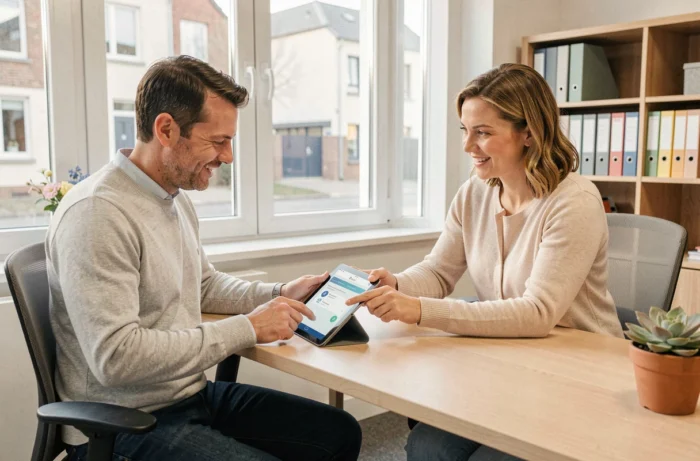
The Communities module, available in middle and high schools, now consolidates all the work of a class or group in a single space. The stated goal is to reduce dispersion between messaging, lockers, and notebooks.
The Locker, in particular, is evolving into a comprehensive tool for distribution and document collection. Teachers can distribute files to a targeted group and retrieve submissions in the same space, without going through messaging. This simplification reduces the number of actions required for both students and teachers.
The Notebook has also been visually revamped. While the functional content remains similar, the new interface facilitates reading on mobile, which aligns with the strategy to improve the experience on small screens.
Simplified access to Neo Yvelines: connection pathways and authentication
One of the recurring barriers to using ENTs remains the connection process. Neo Yvelines has revised its identification screen so that users can more quickly locate their institution and profile (student, parent, staff).
For integrated external services, the authentication pathway still varies according to status:
- Students access Pix via Resources then Media Center, with automatic authentication from the ENT.
- Teachers can go through ARENA or through a connector configured in Neo.
- Parents do not have access to the same third-party services, their scope being limited to academic monitoring and communication.
The order of September 7, 2026, should ultimately standardize these pathways. For now, the coexistence of multiple access routes remains a source of confusion, especially during the first weeks of the school year.
The key takeaway from this 2026 school year for Neo Yvelines is less about new features and more about the regulatory framework that governs them. The September order imposes a common foundation of security and interoperability that will structure updates in the coming months, well beyond just the Yvelines department.