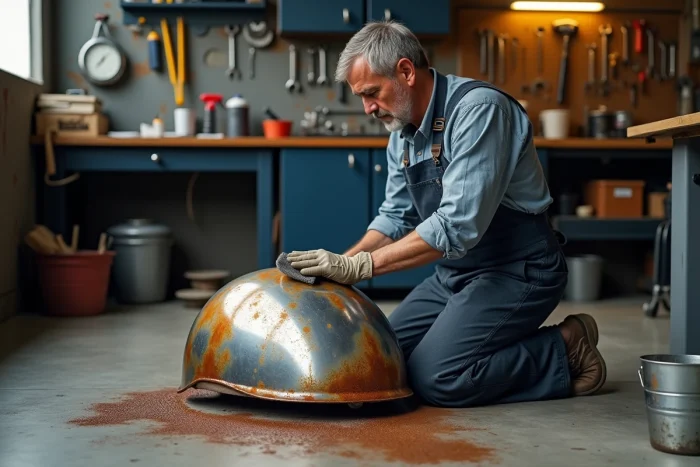
Orange stains on a bathroom faucet, an old car bumper losing its shine, a motorcycle part covered in brown spots: rust on chrome is a common problem, but rarely well understood. Chrome itself does not rust. It is the metal underneath (steel, iron) that oxidizes when the thin layer of chrome plating is scratched or worn. Knowing where the problem comes from changes how to address it.
Electrolytic chrome or PVD finish: tailor cleaning to the right coating
Have you ever noticed that two “chrome” objects do not react the same way to the same cleaning product? The reason is simple: not all chrome is made the same way.
Classic chrome plating, known as electrolytic, deposits a layer of pure chrome onto the metal through a chemical bath. This coating tolerates a mild abrasive or a gentle acid like white vinegar quite well.
In recent years, many parts sold as “chrome” (designer faucets, shiny black motorcycle accessories, car rims) actually use a PVD coating or a polyurethane lacquer with a chrome effect. Manufacturers like Grohe, Hansgrohe, or Dornbracht specify in their updated manuals that vinegar or abrasive powders can cause irreversible dulling on these finishes.
Before scrubbing anything, it is essential to identify the type of surface. The rule: if the piece is recent and has a shiny black appearance or an iridescent reflection, it is better to limit yourself to a damp microfiber cloth and a neutral pH product. An effective method for removing rust from classic electrolytic chrome can permanently damage a PVD finish.
Aluminum foil and white vinegar: the homemade method that really works
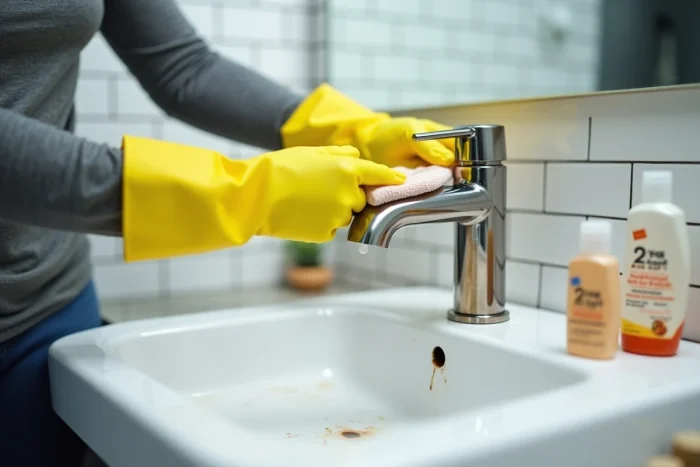
Among all the cleaning tips circulating, the combination of aluminum foil and water (or diluted white vinegar) is the one that gives the most reliable results on classic electrolytic chrome plating.
The chemical principle in two words
Aluminum is a more “reactive” metal than chrome. When you rub a damp sheet of aluminum on a rust stain, a redox reaction occurs. Aluminum attracts the oxygen bonded to the rusted iron and releases the surface. Chrome, on the other hand, remains intact because it is not attacked in this exchange.
White vinegar accelerates this reaction due to its mild acidity. It also dissolves the limescale deposits that often accompany rust on faucets and bathroom accessories.
Practical application
- Cut a square of aluminum foil about ten centimeters. Crumple it slightly to form a soft ball, not too tight.
- Soak it in a mixture of warm water and white vinegar (half and half). Rub the rusted area with circular motions, without applying too much pressure.
- Wipe with a soft, clean cloth. If any residues persist, repeat the operation. Finish with a rinse in clear water and a complete drying with a microfiber cloth.
A complete drying after each cleaning prevents rust from returning. Residual moisture is the primary cause of rapid reappearance of stains on chrome.
Baking soda and toothpaste: when to use them safely
Baking soda and toothpaste are two very mild abrasives, often mentioned for restoring shine to dull chrome. Their use makes sense, but in specific cases.
Baking soda mixed with a little water forms a slightly grainy paste. Applied with a cloth in circular motions, it removes superficial rust stains and dull deposits without scratching a well-maintained electrolytic chrome. Baking soda acts like a very fine mechanical polish, not like a chemical product.
Toothpaste (white, not gel) works on the same principle. Its micro-abrasiveness is sufficient for light marks and early dulling. On long-established rust, it will not be effective enough.
In both cases, rinse thoroughly with clear water after cleaning. A residue of baking soda left to dry can leave difficult-to-remove white marks.
Professional neutral pH products: the choice of detailing workshops
Strong acids (phosphoric acid, oxalic acid) found in some consumer rust removers work quickly, but they pose a real risk to chrome. They can cause micro-pitting and permanent dulling of the surface, especially if the application time is too long.
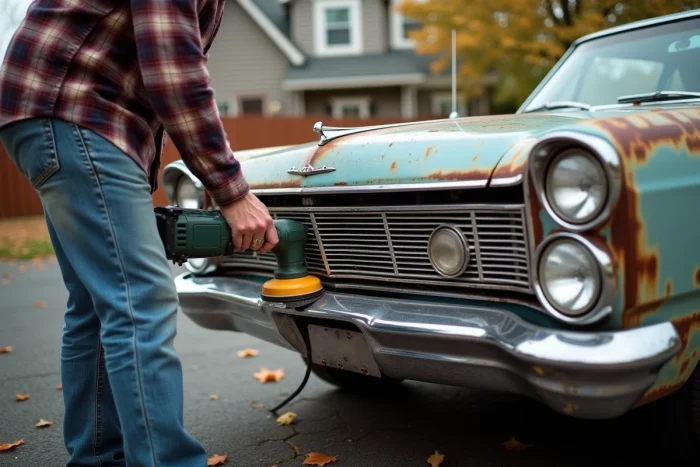
In recent years, automotive and motorcycle detailing workshops have turned to chrome-specific deoxidizers, with a pH close to neutral. Brands like Koch-Chemie are regularly cited by detailing professionals for their ability to remove surface rust without attacking the fine and fragile chrome layer.
This type of product costs more than a bottle of vinegar, but it is aimed at cases where the piece has value (classic car chrome, collectible motorcycle accessories, high-end faucets). If the rust is light and the piece is common, the homemade methods described above are more than sufficient.
Protecting chrome after cleaning: wax or oil
Removing rust without protecting the surface afterward means starting the work over a few weeks later. The chrome layer, once cleaned, remains exposed to the same aggressions (moisture, salt, splashes).
Two simple options yield good results:
- A wax for chrome metals, applied in a thin layer with a microfiber cloth. It creates a hydrophobic film that repels water and slows down the oxidation of the underlying metal.
- A thin film of oil (like WD-40 or light mineral oil), wiped to leave only an invisible veil. This solution is quick but less durable than wax: it is well-suited for regular maintenance between two wax applications.
- On motorcycle or car parts exposed to the elements, renewing the protection every two to three months significantly limits the reappearance of rust stains.
The classic trap: applying wax or oil on a still damp surface. Chrome must be perfectly dry before any protection, otherwise the trapped water under the protective film accelerates corrosion instead of slowing it down.
Well-maintained chrome, cleaned with the right method and regularly protected, retains its shine for years. The real factor that makes the difference is not the product used, but the consistency of maintenance and systematic drying after each contact with water.