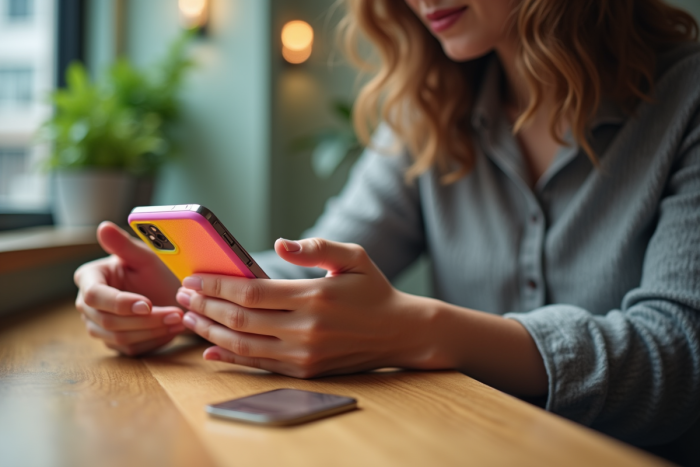
A smartphone placed on a table is no longer just a piece of technology: it is a moving canvas, infinitely customizable, that reveals both the era and the personality of its owner. Major smartphone brands are multiplying collaborations with digital artists, blurring the traditional boundaries between technology and creation. Customization options, once limited to a few wallpapers, now extend to immersive experiences, sometimes ephemeral, dictated by algorithms.
Features once considered accessories are becoming major selling points. The attention given to the interface is no longer limited to aesthetics but influences social perception and daily use. The choices made by manufacturers in 2025 reflect an acceleration of this transformation, between global standardization and individual demands.
What the visual trends of 2025 reveal: materials, colors, and evolving interfaces
In 2025, the quest for innovation goes beyond technical specifications. It permeates every detail of design. The materials that dress smartphones venture into new territories: recycled glass, textures reminiscent of nature, unexpected matte finishes, a subtle blend of natural and synthetic. We are witnessing a true reinvention of touch and sight.
On the interface side, graphic design breaks free from past dictates. The movements of minimalism, neumorphism, and glassmorphism intertwine, seeking an interface that combines sobriety and expressiveness. What matters now is the harmony between functionality and personality.
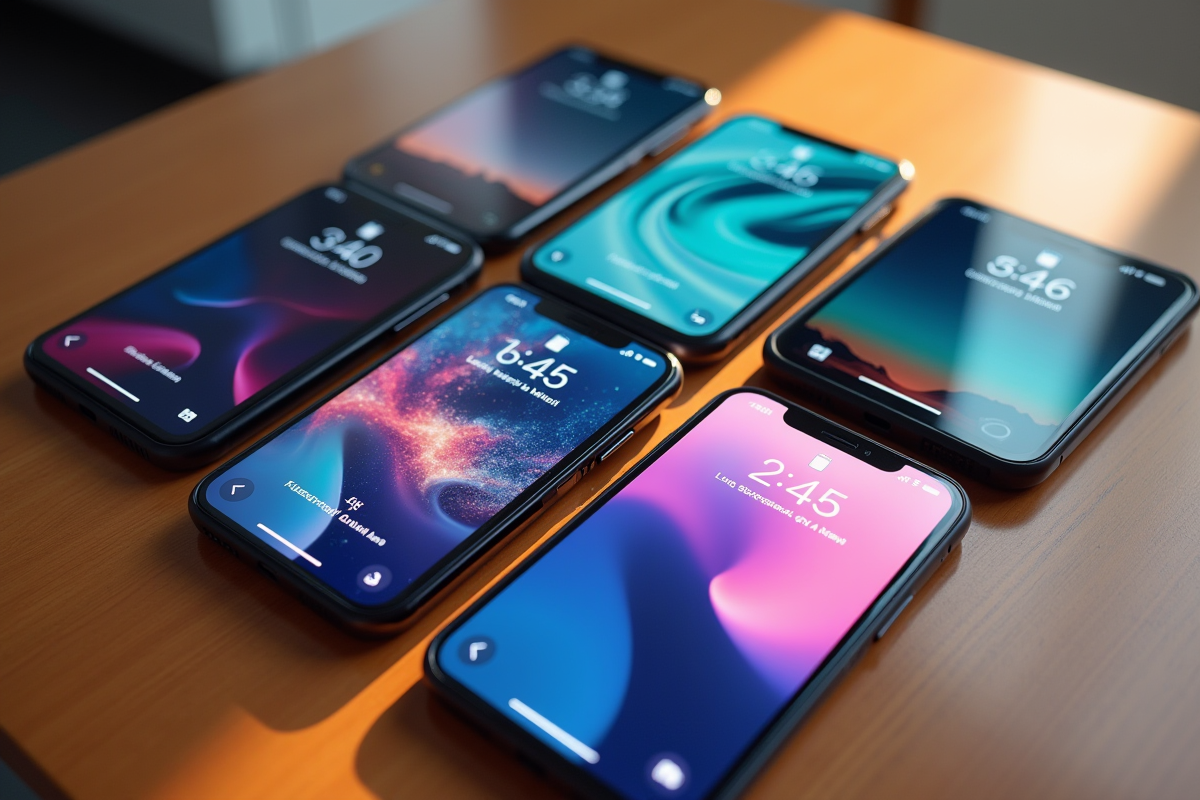
The color palettes are reinventing themselves: we are moving away from saturated tones to explore more natural shades, sophisticated gradients, sometimes bold, never garish. Flat design no longer holds the monopoly; the visual scene opens up to 3D, geometric abstraction, and nostalgic nods to 90s and 2000s pixel art. Immersive interfaces take over, driven by the arrival of augmented reality. As for kinetic typography, it injects a new rhythm into navigation, animating each screen with a subtle yet striking breath.
The emergence of foldable screens and interactive textures pushes the boundaries of user experience. People seeking originality increasingly demand custom elements:
- modular icons,
- dynamic widgets,
- adaptive themes.
In this trend, the wallpaper for iPhone 16 Pro Max stands as a reference; the article “The iPhone 16 Pro Max Wallpapers That Captivate the Eye” on CyberFlux attests to this, attracting the curious in search of striking visuals.
This thirst for renewal goes hand in hand with a new focus on inclusive graphic design and eco-design. Accessibility is at the heart of graphic choices, along with the desire for a more responsible aesthetic. Immersive interactive experiences transform the smartphone into a creative playground, blurring the line between a daily tool and an extension of oneself.
Towards a personalized experience: how these innovations transform our relationship with smartphones
Now, the user experience goes far beyond the mere speed of applications or the comfort of navigation. Micro-interactions are multiplying: every gesture, every animation, enhances the feeling of a direct, almost physical connection with the interface. The possibilities for real-time customization empower everyone to shape their digital universe, from color choices to widget arrangements, to adjusting themes according to mood or daily desires.
Far from superficial customization, settings extend to typography, icons, and especially accessibility. Everyone can adapt readability, play with contrasts, and adjust the size of elements with a simple gesture. Visual accessibility is enriched, driven by the rise of artificial intelligence and adaptive onboarding technologies. Now, the interface anticipates and responds to the specific needs of each user, making the experience smoother and more inclusive.
On the designers’ side, the approach relies on A/B Testing and in-depth behavior analysis. UI design becomes a testing ground: applications no longer just align functionalities. They build a narrative, articulated around immersive visual storytelling, punctuated by micro-animations and a strong graphic identity. The goal: to weave a lasting, authentic bond between the user and their device, a tailored experience that evolves with modern life.
As the smartphone establishes itself as an extension of oneself, visual customization is no longer a detail. It becomes a mirror of usage, an era, a desire to assert one’s difference. And tomorrow? It’s hard to imagine a step back. The boundary between technology and creativity has never been so thin, and everyone now holds the brush.