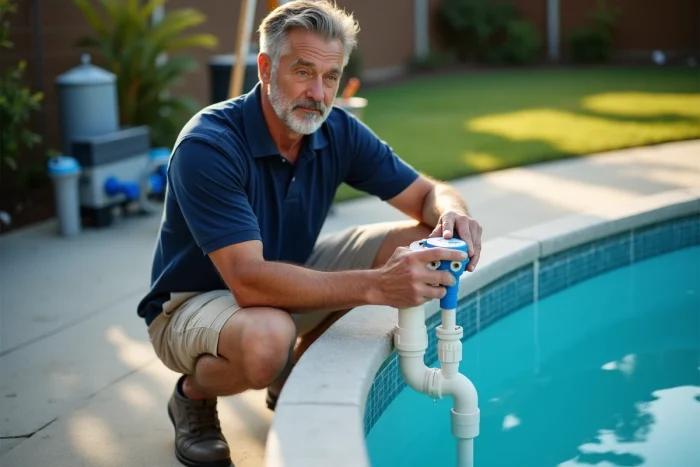
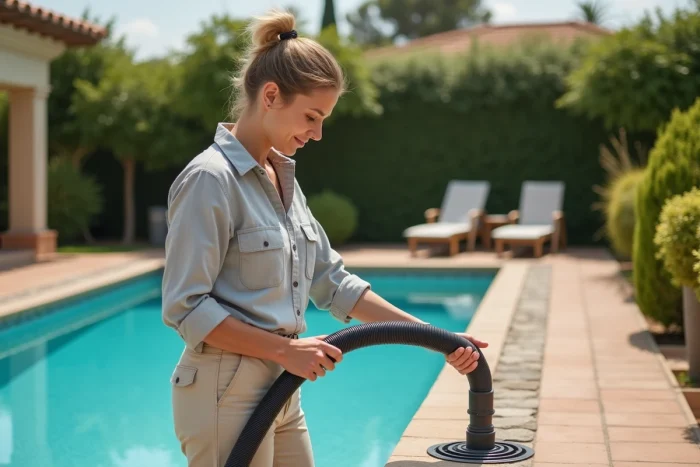
We plug in the vacuum cleaner, start the pump, and the suction remains weak. In most cases, the problem comes from a valve that is incorrectly positioned in the technical room. Knowing which valve to close to use the pool vacuum inlet determines the suction power and protects the pump from losing prime.
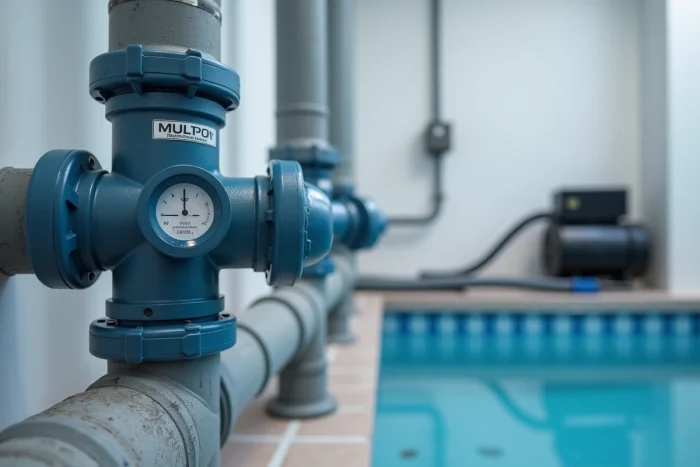
Before touching anything, we identify the valves present on the suction circuit: skimmer(s), main drain, vacuum inlet. Each open valve shares the flow from the pump. To concentrate all the power on the vacuum inlet, we close the skimmer valve and the main drain valve. The only valve that remains open on the suction side is the vacuum inlet valve.
To go further into the adjustment logic, a guide details which valve to close for pool vacuuming based on common configurations of the technical room.
Adjusting the multiport valve during vacuuming
Once the suction valves are properly closed, we move on to the filter. The multiport valve (often with six positions on a sand filter) must be set to the correct position before starting the pump.
For standard cleaning with filtered water returning to the pool, we set the multiport valve to “Filtration.” The debris that is vacuumed remains trapped in the sand filter, and the clean water flows back to the return jets.
When the bottom of the pool is heavily loaded (dead algae after a shock treatment, fine sand, dirt), the “Waste” position prevents clogging the filter. The water goes directly to the drain without passing through the filter. The water level in the pool decreases during the operation, so it is necessary to monitor the water line and plan for a water top-up after cleaning.
Sequence to follow to avoid damaging the pump
- Stop the pump before turning the handle of the multiport valve. Changing position while running can crack the star seal or the valve body.
- Close the skimmer and main drain valves, open the vacuum inlet valve, then restart the pump.
- After vacuuming, set the multiport valve back to “Filtration,” reopen the skimmer and main drain valves, then restart the pump in normal mode.
Vacuum inlet and saltwater pool: valve corrosion and specific precautions
In a pool treated by salt electrolysis, the metal components of the hydraulic circuit undergo accelerated corrosion. Brass or low-grade stainless steel valves oxidize faster than in a traditional chlorine pool, which directly affects their sealing and operation.
Feedback on this point varies among installers, but it is frequently observed that valve handles become stuck after two or three seasons on poorly equipped salt pools. Salt attacks the O-rings and metal threads, making the closure imprecise. A valve that does not close completely allows flow to pass to the skimmer and reduces suction power at the vacuum inlet.
Choosing materials suitable for saltwater
PVC or polypropylene valves resist the saline environment better than their metal counterparts. The same goes for fittings and seals: Viton or EPDM are preferred, as they withstand prolonged contact with saltwater without degrading.
On-site, checking the condition of the valves at the beginning of the season takes a few minutes and avoids unpleasant surprises. We turn each handle fully in both directions to ensure that the valve opens and closes without forcing. A dry or cracked O-ring can be replaced for a few euros, compared to a complete valve replacement if corrosion has reached the body.
Filtration and valve position: mistakes that damage the sand filter
The sand filter bears the consequences of incorrect valve settings long before we notice it. Two errors frequently occur on-site.
The first: vacuuming a very dirty bottom in “Filtration” position without having backwashed beforehand. The already clogged filter increases in pressure, the flow drops, and suction becomes ineffective. A backwash of a few minutes before vacuuming revives the flow and protects the filter media.
The second: forgetting to reopen the skimmer and main drain valves after vacuuming. The pump then only sucks through the vacuum inlet, without the vacuum hose connected. Result: air intake, loss of prime, and risk of pump overheating if no one intervenes quickly.
Check the pressure gauge as an indicator
The pressure gauge fixed on the cover of the sand filter indicates the pressure of the circuit. In normal operation with the vacuum inlet active, the pressure should remain stable. A rapid rise in pressure signals a saturated filter or a mispositioned valve. If the needle rises beyond the usual range, we turn off the pump and check the valve positions before restarting.
NF EN 17781 standard and check valve on vacuum inlet
The European standard NF EN 17781, updated in March 2026, now requires the installation of check valves on vacuum inlets. This requirement aims to prevent the backflow of polluted water into the pool during filter rinsing phases.
Pools built before 2024 are not equipped with this device. In these installations, backflow can bring trapped residues back into the pool, especially after a poorly sequenced backwash. Adding a check valve downstream of the vacuum inlet remains a simple intervention, achievable without major modifications to the hydraulic circuit.
For saltwater pools, this point becomes even more critical: backflow of water laden with corrosion residues degrades water quality and puts more strain on the electrolysis cell. Checking for the presence and good condition of this valve is part of the early season checks, just like inspecting seals and handles.